2026
Theory of Mind and Continual Reinforcement Learning for Bullying Intervention
Luis Zhinin-Vera, José J. González-García, Víctor López-Jaquero, Elena Navarro, Pascual González
Neural Computing and Applications. 2026 Open Access
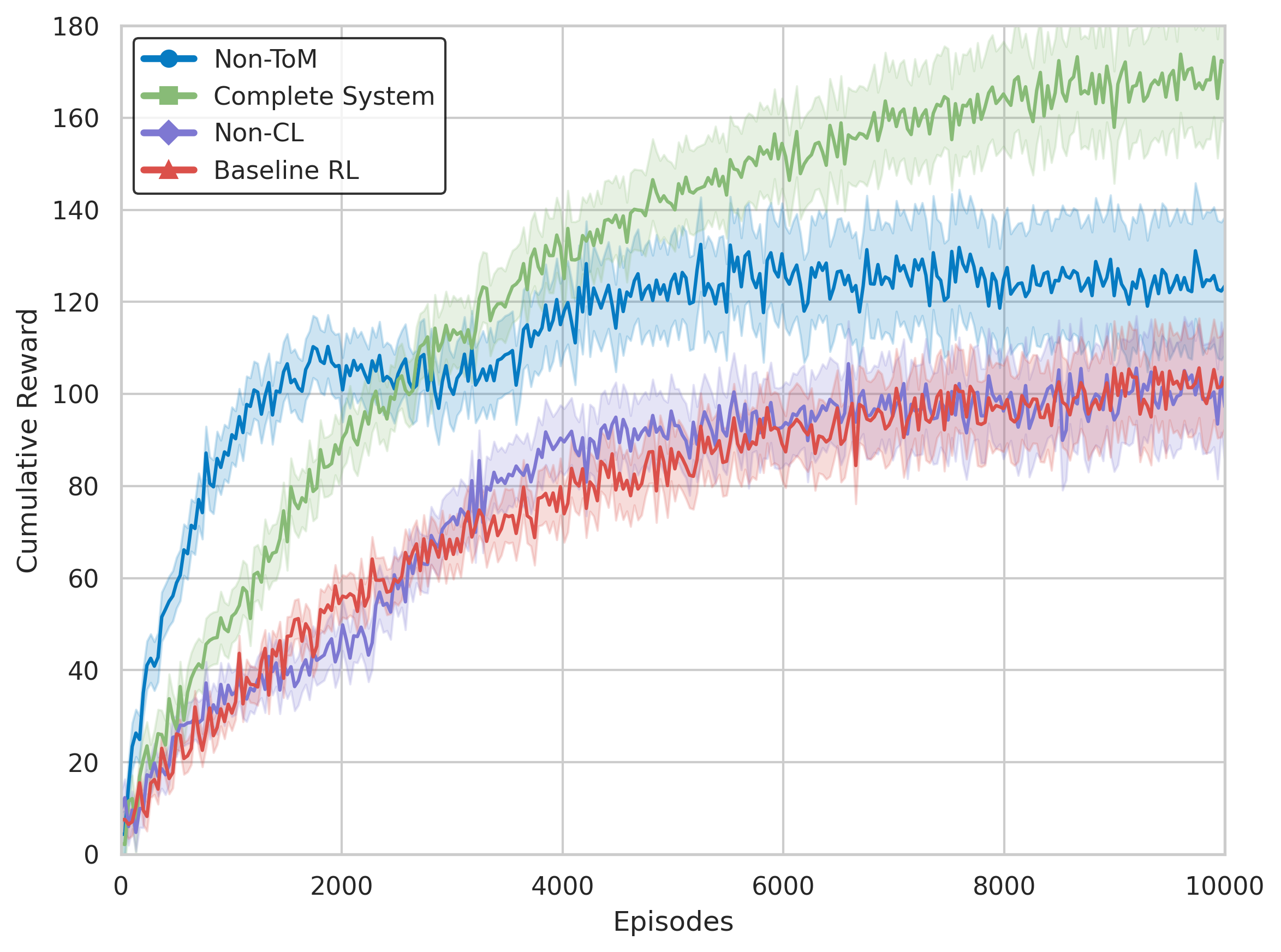
The proposed approach incorporates abstraction mechanisms derived from Theory-Theory (TT) and Simulation Theory (ST), enabling agents to reason about bullying interactions either through predefined rules or simulated experiences. The system has been evaluated in a simulated school environment with varying levels of bullying severity, demonstrating its effectiveness in dynamically adapting intervention strategies. The results indicate that combining ToM, RL, and CL leads to superior performance compared to standard RL-based approaches, particularly in high-risk bullying scenarios. This work provides a foundation for the development of socially intelligent AI systems capable of proactive and context-sensitive intervention in educational settings.
Theory of Mind and Continual Reinforcement Learning for Bullying Intervention
Luis Zhinin-Vera, José J. González-García, Víctor López-Jaquero, Elena Navarro, Pascual González
Neural Computing and Applications. 2026 Open Access
The proposed approach incorporates abstraction mechanisms derived from Theory-Theory (TT) and Simulation Theory (ST), enabling agents to reason about bullying interactions either through predefined rules or simulated experiences. The system has been evaluated in a simulated school environment with varying levels of bullying severity, demonstrating its effectiveness in dynamically adapting intervention strategies. The results indicate that combining ToM, RL, and CL leads to superior performance compared to standard RL-based approaches, particularly in high-risk bullying scenarios. This work provides a foundation for the development of socially intelligent AI systems capable of proactive and context-sensitive intervention in educational settings.
2025
Drone Detection and Antidrone System Using YOLO: An Effective Approach to Airspace
Jaime vicente Astudillo, Roberth Chachalo, Cristhian Iza, Luis Zhinin-Vera
Smart Technologies, Systems and Applications (SmartTech-IC 2024) 2025
The proliferation of drones has raised significant concerns about unauthorized incursions into restricted airspace, necessitating effective detection and neutralization strategies. This study presents a comprehensive approach integrating the YOLO (You Only Look Once) object detection algorithm with interference technology to enhance the airspace security. The YOLOv8 model, selected for its superior accuracy and robustness, was rigorously trained and evaluated in real-world scenarios to optimize drone detection. Additionally, the study incorporates the use of MDK4, a tool from the Kali Linux suite, to perform deauthentication attacks, effectively disrupting drone communication and control. Experimental results demonstrate a detection accuracy of 95% with the YOLO-based system, and a complete neutralization process averaging 2.3 s. Performance metrics such as precision, recall, and false positive/negative rates were utilized to validate the system’s effectiveness, underscoring its potential in safeguarding against aerial threats in increasingly drone-populated skies.
Drone Detection and Antidrone System Using YOLO: An Effective Approach to Airspace
Jaime vicente Astudillo, Roberth Chachalo, Cristhian Iza, Luis Zhinin-Vera
Smart Technologies, Systems and Applications (SmartTech-IC 2024) 2025
The proliferation of drones has raised significant concerns about unauthorized incursions into restricted airspace, necessitating effective detection and neutralization strategies. This study presents a comprehensive approach integrating the YOLO (You Only Look Once) object detection algorithm with interference technology to enhance the airspace security. The YOLOv8 model, selected for its superior accuracy and robustness, was rigorously trained and evaluated in real-world scenarios to optimize drone detection. Additionally, the study incorporates the use of MDK4, a tool from the Kali Linux suite, to perform deauthentication attacks, effectively disrupting drone communication and control. Experimental results demonstrate a detection accuracy of 95% with the YOLO-based system, and a complete neutralization process averaging 2.3 s. Performance metrics such as precision, recall, and false positive/negative rates were utilized to validate the system’s effectiveness, underscoring its potential in safeguarding against aerial threats in increasingly drone-populated skies.
Enhancing Diabetes Diagnosis Through Machine Learning: A Comparative Study
Denisse Enríquez-Ortega, Bryan Chulde-Fernández, Paula Pozo-Coral, Anahí Vaca, Luis Zhinin-Vera, Diego Almeida-Galárraga, Lenin Ramírez-Cando, Andrés Tirado-Espín, Carolina Cadena-Morejón, Fernando Villalba-Meneses, Cesar Guevara, Patricia Acosta-Vargas
Applied Sciences 2025
Diabetes is a chronic metabolic disorder characterized by persistent hyperglycemia. The globally rising prevalence of diabetes has made early and accurate diagnosis imperative to avoid long-term sequelae and decrease the cost burden on health facilities. Machine Learning (ML) has emerged as a highly effective tool of clinical science because of its capability of discovering complex patient data patterns and diagnostic performance optimization. This paper is a comparative performance evaluation of five ML models—Decision Tree (DT), Random Forest (RF), Logistic Regression (LR), K-Nearest Neighbors (KNN), and Multilayer Perceptron (MLP)—utilized for diabetes prediction. Data were processed using the “Healthcare Diabetes Dataset,” made up of eight commonly used clinical parameters. For making the models trustworthy, a strong data preprocessing pipeline was utilized, made up of outlier detection using the Interquartile Range (IQR), normalization of data, and class balancing using the Synthetic Minority Over-sampling Technique (SMOTE). Results reveal that the RF and DT models achieved the highest performance based on accuracy rates of 98.15% and 97.51%, respectively, though more moderate outcomes were recorded by LR and MLP. They reveal the remarkable potential of ML models, particularly ensemble-based ML models such as RF, at supporting early diagnosis of diabetes. When implemented complementarily to clinical decision-making processes, these models can serve a cost-effective and effective replacement of conventional diagnostic methods.
Enhancing Diabetes Diagnosis Through Machine Learning: A Comparative Study
Denisse Enríquez-Ortega, Bryan Chulde-Fernández, Paula Pozo-Coral, Anahí Vaca, Luis Zhinin-Vera, Diego Almeida-Galárraga, Lenin Ramírez-Cando, Andrés Tirado-Espín, Carolina Cadena-Morejón, Fernando Villalba-Meneses, Cesar Guevara, Patricia Acosta-Vargas
Applied Sciences 2025
Diabetes is a chronic metabolic disorder characterized by persistent hyperglycemia. The globally rising prevalence of diabetes has made early and accurate diagnosis imperative to avoid long-term sequelae and decrease the cost burden on health facilities. Machine Learning (ML) has emerged as a highly effective tool of clinical science because of its capability of discovering complex patient data patterns and diagnostic performance optimization. This paper is a comparative performance evaluation of five ML models—Decision Tree (DT), Random Forest (RF), Logistic Regression (LR), K-Nearest Neighbors (KNN), and Multilayer Perceptron (MLP)—utilized for diabetes prediction. Data were processed using the “Healthcare Diabetes Dataset,” made up of eight commonly used clinical parameters. For making the models trustworthy, a strong data preprocessing pipeline was utilized, made up of outlier detection using the Interquartile Range (IQR), normalization of data, and class balancing using the Synthetic Minority Over-sampling Technique (SMOTE). Results reveal that the RF and DT models achieved the highest performance based on accuracy rates of 98.15% and 97.51%, respectively, though more moderate outcomes were recorded by LR and MLP. They reveal the remarkable potential of ML models, particularly ensemble-based ML models such as RF, at supporting early diagnosis of diabetes. When implemented complementarily to clinical decision-making processes, these models can serve a cost-effective and effective replacement of conventional diagnostic methods.
InertialMov: Machine Learning Test Based on Inertial Sensors to Predict Mobility Impairment in Low Back Pain Patients
Jeremy Carlosama, Luis Zhinin-Vera, César Guevara, Carolina Cadena-Morejón, Diego Almeida-Galárraga, Lenin J. Ramírez-Cando, Kevin R. Landázuri, Andres Tirado, Patricia Acosta-Vargas, Fernando Villalba
Sensors 2025
Low back pain (LBP) is one of the leading causes of disability in the world's population, yet there are limitations in providing an objective clinical assessment due to its widespread nature. In this work, five machine learning models (LightGBM, XGBoost, HistGradientBoosting, GradientBoosting, and StackingRegressor) were compared to predict trunk mobility based on inertial sensor data. There were 77 individuals with a total of 2160 movement samples of flexion–extension, rotation, and lateralization. Synthetic data augmentation and normalization were performed to be able to work with the data efficiently. Mean absolute error (MAE), mean square error (MSE), and R2 were used to evaluate model performance. Additionally, ANOVA and Tukey’s HSD were used to assess the statistical significance of the models. GradientBoostingRegressor was found to produce the lowest error and statistical significance in flexion–extension and lateralization, while StackingRegressor produced the best error in rotation. The results indicate that inertial sensors and machine learning (ML) can be applied to predict mobility, facilitating personalized rehabilitation and reducing costs. The present study demonstrates that predictive trunk motion modeling can facilitate clinical monitoring and help reduce socioeconomic limitations in patients.
InertialMov: Machine Learning Test Based on Inertial Sensors to Predict Mobility Impairment in Low Back Pain Patients
Jeremy Carlosama, Luis Zhinin-Vera, César Guevara, Carolina Cadena-Morejón, Diego Almeida-Galárraga, Lenin J. Ramírez-Cando, Kevin R. Landázuri, Andres Tirado, Patricia Acosta-Vargas, Fernando Villalba
Sensors 2025
Low back pain (LBP) is one of the leading causes of disability in the world's population, yet there are limitations in providing an objective clinical assessment due to its widespread nature. In this work, five machine learning models (LightGBM, XGBoost, HistGradientBoosting, GradientBoosting, and StackingRegressor) were compared to predict trunk mobility based on inertial sensor data. There were 77 individuals with a total of 2160 movement samples of flexion–extension, rotation, and lateralization. Synthetic data augmentation and normalization were performed to be able to work with the data efficiently. Mean absolute error (MAE), mean square error (MSE), and R2 were used to evaluate model performance. Additionally, ANOVA and Tukey’s HSD were used to assess the statistical significance of the models. GradientBoostingRegressor was found to produce the lowest error and statistical significance in flexion–extension and lateralization, while StackingRegressor produced the best error in rotation. The results indicate that inertial sensors and machine learning (ML) can be applied to predict mobility, facilitating personalized rehabilitation and reducing costs. The present study demonstrates that predictive trunk motion modeling can facilitate clinical monitoring and help reduce socioeconomic limitations in patients.
AI-Assisted Endometriosis Diagnosis: A Multi-CNN Laparoscopic Image Analysis
Dayana Murillo-Guanuchy, Salomé Verdugo-Briones, Anthony Anrango-Mendez, Luis Zhinin-Vera, Cesar Guevara, Lenin Ramírez-Cando, Carolina Cadena-Morejón, Diego Almeida-Galárraga, Paulo Navas-Boada, Andrés Tirado-Espín, Fernando Villalba Meneses
Intelligent Data Engineering and Automated Learning – IDEAL 2025 2025
This study evaluates and compares the performance of three advanced CNN models (DesNet121, InceptionV3, and Xception) using laparoscopic images to identify endometriotic tissue. A custom dataset was compiled by merging images from the ENDI and GLENDA databases, with preprocessing steps including normalization and data augmentation. The models were trained and validated using stratified splits, and assessed based on standard metrics (accuracy, precision, recall, AUC, and confusion matrices). The results revealed accuracy scores of 89%, 91%, and 97% for ResNet121, InceptionV3, and Xception, respectively, with Xception demonstrating the highest performance. This approach offers a potential tool for clinicians, aiming to accelerate diagnosis, reduce the rate of misdiagnosis, and improve patient outcomes.
AI-Assisted Endometriosis Diagnosis: A Multi-CNN Laparoscopic Image Analysis
Dayana Murillo-Guanuchy, Salomé Verdugo-Briones, Anthony Anrango-Mendez, Luis Zhinin-Vera, Cesar Guevara, Lenin Ramírez-Cando, Carolina Cadena-Morejón, Diego Almeida-Galárraga, Paulo Navas-Boada, Andrés Tirado-Espín, Fernando Villalba Meneses
Intelligent Data Engineering and Automated Learning – IDEAL 2025 2025
This study evaluates and compares the performance of three advanced CNN models (DesNet121, InceptionV3, and Xception) using laparoscopic images to identify endometriotic tissue. A custom dataset was compiled by merging images from the ENDI and GLENDA databases, with preprocessing steps including normalization and data augmentation. The models were trained and validated using stratified splits, and assessed based on standard metrics (accuracy, precision, recall, AUC, and confusion matrices). The results revealed accuracy scores of 89%, 91%, and 97% for ResNet121, InceptionV3, and Xception, respectively, with Xception demonstrating the highest performance. This approach offers a potential tool for clinicians, aiming to accelerate diagnosis, reduce the rate of misdiagnosis, and improve patient outcomes.
A Comprehensive Approach to Blood Glucose Prediction: A Multi-Branch Network
Jose Yánez, Luis Zhinin-Vera, Fernando Gonzales
Smart Technologies, Systems and Applications. SmartTech-IC 2024 2025
The prevention of complications associated with hyperglycemia. This study proposes a novel multi-branch neural network model that integrates Long Short-Term Memory (LSTM) networks with a demographic classification model to improve blood glucose prediction accuracy. The model utilizes demographic data to train a neural network, while the OhioT1DM dataset is employed to train the LSTM for forecasting glucose levels. By combining these predictive techniques, the model evaluates both the likelihood of elevated glucose levels and the probability of diabetes based on demographic data. When both predictions indicate a potential risk, the system automatically triggers an alert, thereby facilitating timely clinical interventions. The combined approach demonstrates high accuracy in glucose level prediction compared to traditional models. Furthermore, a user-friendly interface was developed to streamline data entry, allowing for real-time predictions and enhancing the application of the model in clinical settings. Preliminary results indicate that this integrated approach significantly improves predictive performance and supports personalized strategies for the management of diabetes .
A Comprehensive Approach to Blood Glucose Prediction: A Multi-Branch Network
Jose Yánez, Luis Zhinin-Vera, Fernando Gonzales
Smart Technologies, Systems and Applications. SmartTech-IC 2024 2025
The prevention of complications associated with hyperglycemia. This study proposes a novel multi-branch neural network model that integrates Long Short-Term Memory (LSTM) networks with a demographic classification model to improve blood glucose prediction accuracy. The model utilizes demographic data to train a neural network, while the OhioT1DM dataset is employed to train the LSTM for forecasting glucose levels. By combining these predictive techniques, the model evaluates both the likelihood of elevated glucose levels and the probability of diabetes based on demographic data. When both predictions indicate a potential risk, the system automatically triggers an alert, thereby facilitating timely clinical interventions. The combined approach demonstrates high accuracy in glucose level prediction compared to traditional models. Furthermore, a user-friendly interface was developed to streamline data entry, allowing for real-time predictions and enhancing the application of the model in clinical settings. Preliminary results indicate that this integrated approach significantly improves predictive performance and supports personalized strategies for the management of diabetes .
Multi-Agent Systems for Bullying Intervention
Luis Zhinin-Vera, José J. González-García, Víctor López-Jaquero, Elena Navarro, Pascual González
AAMAS '25: Proceedings of the 24th International Conference on Autonomous Agents and Multiagent System 2025 iCORE A*
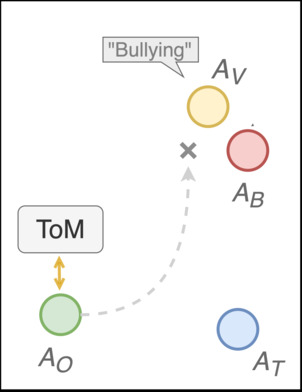
Our approach leverages ToM to allow agents to infer the mental states of others, enabling context-aware decision-making for effective intervention strategies. RL is used to allow the observer agent to learn from past interactions, improving its ability to recognize bullying behaviors and refine its responses. CL ensures the system can adapt to new behaviors and evolving environments, maintaining its effectiveness over time. We present abstraction mechanisms based on Theory-Theory and Simulation Theory, which allow the system to reason about complex social interactions either through predefined rules or simulations. This paper outlines the theoretical framework and design of the proposed algorithm, offering a responsive, flexible, adaptive, and capable solution for bullying prevention and intervention in educational contexts, where socially intelligent systems can play a key role in creating safer environments.
Multi-Agent Systems for Bullying Intervention
Luis Zhinin-Vera, José J. González-García, Víctor López-Jaquero, Elena Navarro, Pascual González
AAMAS '25: Proceedings of the 24th International Conference on Autonomous Agents and Multiagent System 2025 iCORE A*
Our approach leverages ToM to allow agents to infer the mental states of others, enabling context-aware decision-making for effective intervention strategies. RL is used to allow the observer agent to learn from past interactions, improving its ability to recognize bullying behaviors and refine its responses. CL ensures the system can adapt to new behaviors and evolving environments, maintaining its effectiveness over time. We present abstraction mechanisms based on Theory-Theory and Simulation Theory, which allow the system to reason about complex social interactions either through predefined rules or simulations. This paper outlines the theoretical framework and design of the proposed algorithm, offering a responsive, flexible, adaptive, and capable solution for bullying prevention and intervention in educational contexts, where socially intelligent systems can play a key role in creating safer environments.
Mindful Human Digital Twins: Integrating Theory of Mind with multi-agent reinforcement learning
Luis Zhinin-Vera, Elena Pretel, Víctor López-Jaquero, Elena Navarro, Pascual González
Applied Soft Computing 2025 Open Access
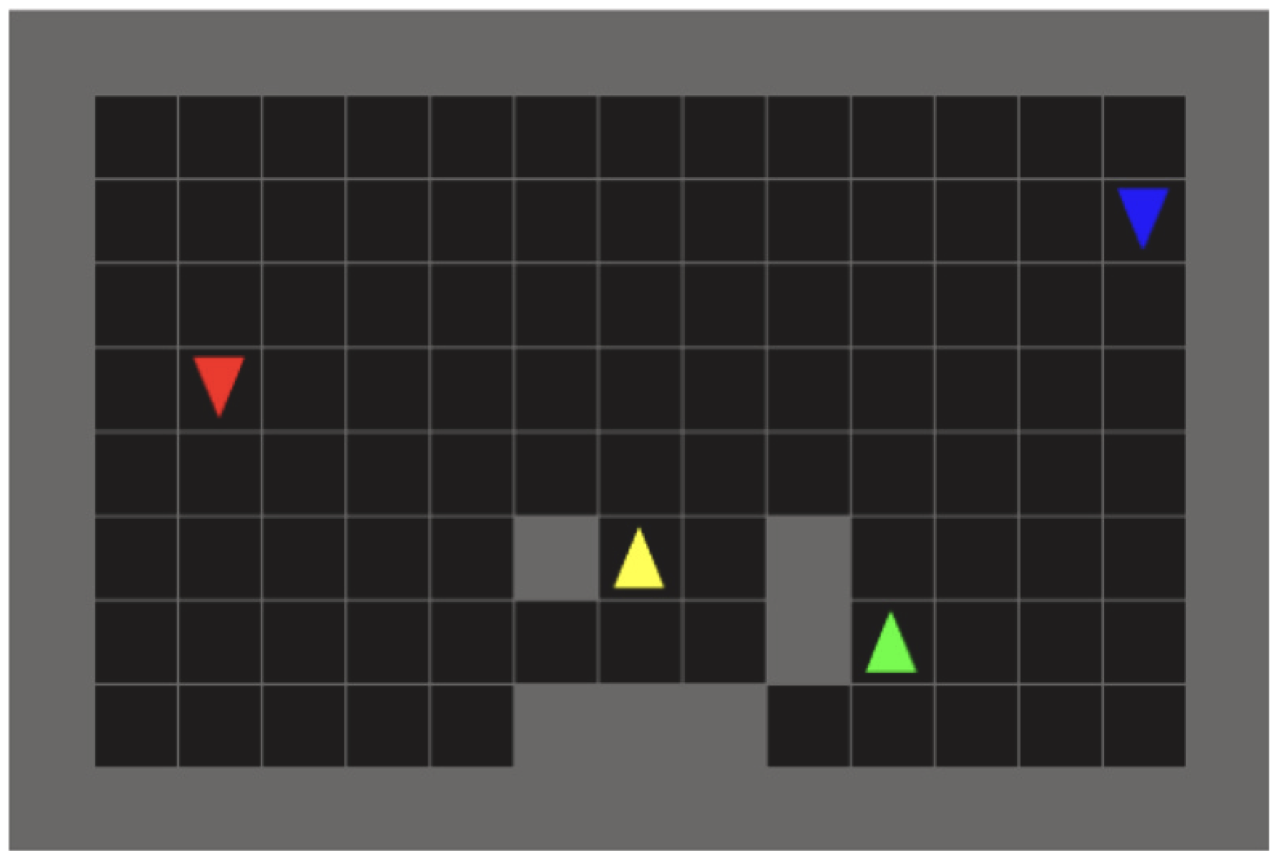
In this paper, we propose a novel approach that leverages Theory-Theory (TT) and Simulation-Theory (ST) to enhance ToM within the MARL framework. Building on the Digital Twins (DT) framework, we introduce the Mindful Human Digital Twin (MHDT). These intelligent systems enriched with ToM capabilities bridge the gap between artificial agents and human-like interactions. In this work, we utilized OpenAI Gymnasium to perform simulations and evaluate the effectiveness of our approach. This work represents a significant step forward in Artificial Intelligence (AI), resulting in socially intelligent systems capable of natural and intuitive interactions with both their environment and other agents. This approach is particularly effective in addressing critical social challenges such as school bullying. This research not only advances the growing field of MARL but also paves the way for sophisticated AI systems with enhanced ToM abilities, tailored for complex and sensitive real-world applications.
Mindful Human Digital Twins: Integrating Theory of Mind with multi-agent reinforcement learning
Luis Zhinin-Vera, Elena Pretel, Víctor López-Jaquero, Elena Navarro, Pascual González
Applied Soft Computing 2025 Open Access
In this paper, we propose a novel approach that leverages Theory-Theory (TT) and Simulation-Theory (ST) to enhance ToM within the MARL framework. Building on the Digital Twins (DT) framework, we introduce the Mindful Human Digital Twin (MHDT). These intelligent systems enriched with ToM capabilities bridge the gap between artificial agents and human-like interactions. In this work, we utilized OpenAI Gymnasium to perform simulations and evaluate the effectiveness of our approach. This work represents a significant step forward in Artificial Intelligence (AI), resulting in socially intelligent systems capable of natural and intuitive interactions with both their environment and other agents. This approach is particularly effective in addressing critical social challenges such as school bullying. This research not only advances the growing field of MARL but also paves the way for sophisticated AI systems with enhanced ToM abilities, tailored for complex and sensitive real-world applications.
Integrating Theory of Mind, Reinforcement Learning, and Continual Learning
Luis Zhinin-Vera, Víctor López-Jaquero, Elena Navarro, Pascual González, Frank Dignum
Submitted to Journal of Artificial Intelligence 2025 Submitted
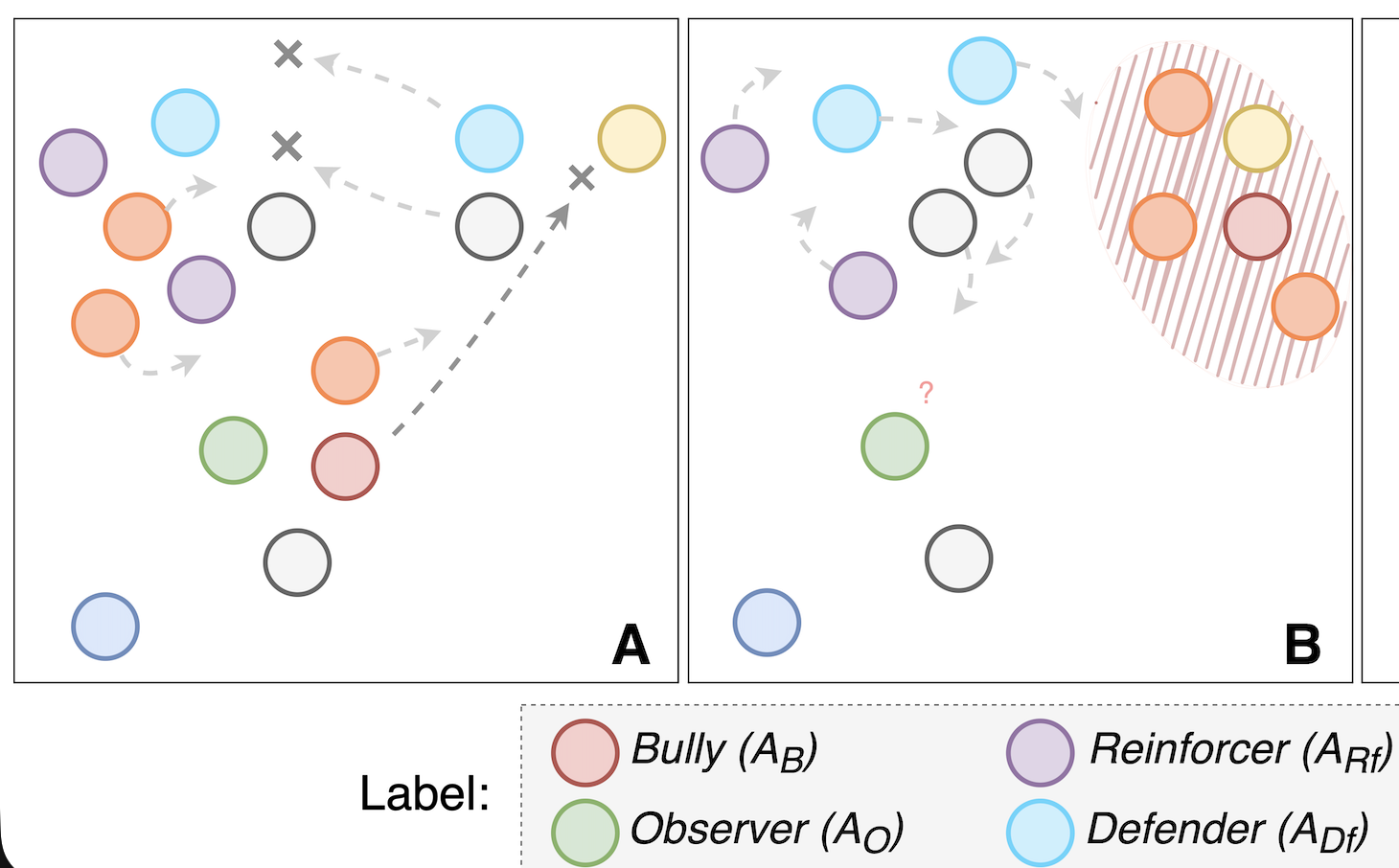
We propose an integrative multi-agent architecture that combines \textit{Theory of Mind} (ToM), \textit{Reinforcement Learning} (RL), and \textit{Continual Learning} (CL). Each agent operates under role-specific decision architectures and social constraints. The observer agent employs ToM-based reasoning to infer others’ intentions and goals, guiding interventions consistent with social norms. A risk-sensitive behavioral engine regulates interactions by dynamically adapting roles, rules, and available actions across different risk conditions. Experimental simulations across low-, moderate-, and high-risk environments demonstrate that the proposed system effectively fosters adaptive and norm-consistent interventions. Agents exhibit emergent behavioral role transitions—particularly among initially passive bystanders—and maintain long-term decision performance under evolving social dynamics. Quantitative metrics, including Observer Decision Accuracy (ODA), Social Role Transition Rate (SRTR), Intervention Success Rate (ISR), and Average Episode Reward (AER), confirm the robustness and adaptability of the proposed framework.
Integrating Theory of Mind, Reinforcement Learning, and Continual Learning
Luis Zhinin-Vera, Víctor López-Jaquero, Elena Navarro, Pascual González, Frank Dignum
Submitted to Journal of Artificial Intelligence 2025 Submitted
We propose an integrative multi-agent architecture that combines \textit{Theory of Mind} (ToM), \textit{Reinforcement Learning} (RL), and \textit{Continual Learning} (CL). Each agent operates under role-specific decision architectures and social constraints. The observer agent employs ToM-based reasoning to infer others’ intentions and goals, guiding interventions consistent with social norms. A risk-sensitive behavioral engine regulates interactions by dynamically adapting roles, rules, and available actions across different risk conditions. Experimental simulations across low-, moderate-, and high-risk environments demonstrate that the proposed system effectively fosters adaptive and norm-consistent interventions. Agents exhibit emergent behavioral role transitions—particularly among initially passive bystanders—and maintain long-term decision performance under evolving social dynamics. Quantitative metrics, including Observer Decision Accuracy (ODA), Social Role Transition Rate (SRTR), Intervention Success Rate (ISR), and Average Episode Reward (AER), confirm the robustness and adaptability of the proposed framework.
MAS4DT: A novel proposal for developing Digital Twins following a Multi-Agent System approach
Elena Pretel, Luis Zhinin-Vera, Elena Navarro, Víctor López-Jaquero, Pascual González
Journal of Systems and Software 2025 Open Access
The Digital Twin (DT) concept has evolved into its current definition since its creation in 2003. It now comprises a physical entity and its virtual counterpart, plus their interrelated data connections and uses the virtual counterpart to monitor, simulate, control, and predict the physical entity's behaviour. Most of the proposals in this field have focused on specific use cases rather than on describing the proper guidelines for designing DTs. This paper addresses a significant research challenge by means of a domain-agnostic proposal for DT design. Our new proposal, MAS4DT, is a method for guiding stakeholders in their DT designs following the Multi-Agent Systems (MAS) paradigm, so that the MAS provides the support for the development of the virtual counterpart of the DT. In this work, the application of MAS4DT is illustrated by a DT wind turbine design. We also describe MAS4DT's evaluation in a controlled experiment of its understandability with regard to the 5 dimensions model, another well-known proposal for this type of design. The evaluation was designed considering the properties that a DT should support. The results show that MAS4DT outperforms the 5 dimensions model and indicates its potential use for DT design. Finally, this controlled experiment represents the first empirical validation of proposals for developing DT. The design of this controlled experiment can be used in subsequent similar evaluations.
MAS4DT: A novel proposal for developing Digital Twins following a Multi-Agent System approach
Elena Pretel, Luis Zhinin-Vera, Elena Navarro, Víctor López-Jaquero, Pascual González
Journal of Systems and Software 2025 Open Access
The Digital Twin (DT) concept has evolved into its current definition since its creation in 2003. It now comprises a physical entity and its virtual counterpart, plus their interrelated data connections and uses the virtual counterpart to monitor, simulate, control, and predict the physical entity's behaviour. Most of the proposals in this field have focused on specific use cases rather than on describing the proper guidelines for designing DTs. This paper addresses a significant research challenge by means of a domain-agnostic proposal for DT design. Our new proposal, MAS4DT, is a method for guiding stakeholders in their DT designs following the Multi-Agent Systems (MAS) paradigm, so that the MAS provides the support for the development of the virtual counterpart of the DT. In this work, the application of MAS4DT is illustrated by a DT wind turbine design. We also describe MAS4DT's evaluation in a controlled experiment of its understandability with regard to the 5 dimensions model, another well-known proposal for this type of design. The evaluation was designed considering the properties that a DT should support. The results show that MAS4DT outperforms the 5 dimensions model and indicates its potential use for DT design. Finally, this controlled experiment represents the first empirical validation of proposals for developing DT. The design of this controlled experiment can be used in subsequent similar evaluations.
2024
Enhancing Spinal Health: Personalized Exoskeleton for Preventing and Rehabilitating Heavy Lifting-Related Conditions
Karen Cáceres-Benítez, Denisse Enríquez, Bryan Chulde-Fernández, Gabriela Cevallos, Ana Marcillo, Luis Zhinin-Vera, Diego Almeida-Galárraga, Carolina Cadena-Morejón, Andrés Tirado-Espín, Fernando Villalba Meneses
Intelligent Systems Conference 2024
This study explores the efficacy of the Support Vector Machine (SVM) algorithm as a diagnostic classifier for distinguishing between excessive spinal loading and other spinal conditions. By visualizing a multidimensional image classification dataset in three-dimensional space, distinct clusters corresponding to patients with scoliosis, spondy-lolisthesis, and normal spinal conditions were identified. Principal component analysis revealed a correlation between high weight-bearing loads and spondylolisthesis development, while scoliosis was associated with different factors. SVM training achieved a robust 97% accuracy when assessing cases beyond the training set, affirming its reliability in diagnosing spinal conditions. A customized exoskeleton prototype, designed to fit individual body measurements, was created for rehabilitation, pos-tural support, and preventing spondylolisthesis. The integration of an Electric Actuator System offered active control and adaptability, albeit with higher initial expenses. The exoskeleton improved shoulder stability using Scapula Support Plates and Shoulder Support Plates (Acromion). These findings highlight the potential of both SVM technology and per-sonalized exoskeletons in enhancing spinal health and posture.
Enhancing Spinal Health: Personalized Exoskeleton for Preventing and Rehabilitating Heavy Lifting-Related Conditions
Karen Cáceres-Benítez, Denisse Enríquez, Bryan Chulde-Fernández, Gabriela Cevallos, Ana Marcillo, Luis Zhinin-Vera, Diego Almeida-Galárraga, Carolina Cadena-Morejón, Andrés Tirado-Espín, Fernando Villalba Meneses
Intelligent Systems Conference 2024
This study explores the efficacy of the Support Vector Machine (SVM) algorithm as a diagnostic classifier for distinguishing between excessive spinal loading and other spinal conditions. By visualizing a multidimensional image classification dataset in three-dimensional space, distinct clusters corresponding to patients with scoliosis, spondy-lolisthesis, and normal spinal conditions were identified. Principal component analysis revealed a correlation between high weight-bearing loads and spondylolisthesis development, while scoliosis was associated with different factors. SVM training achieved a robust 97% accuracy when assessing cases beyond the training set, affirming its reliability in diagnosing spinal conditions. A customized exoskeleton prototype, designed to fit individual body measurements, was created for rehabilitation, pos-tural support, and preventing spondylolisthesis. The integration of an Electric Actuator System offered active control and adaptability, albeit with higher initial expenses. The exoskeleton improved shoulder stability using Scapula Support Plates and Shoulder Support Plates (Acromion). These findings highlight the potential of both SVM technology and per-sonalized exoskeletons in enhancing spinal health and posture.
Comparative Analysis of Neural Networks and Data Processing Techniques for Parkinson's Gait Classification
Israel Reyes, Francis Andaluz, Kerly Troya, Luis Zhinin-Vera, Diego Almeida-Galárraga, Carolina Cadena-Morejón, Andrés Tirado-Espín, Santiago Villalba-Meneses, Cesar Guevara
Intelligent Systems and Applications 2024
Parkinson's disease (PD) is an advancing neurodegenerative condition characterized by motor symptoms, including disturbances in gait and varying degrees of severity, typically assessed using the Hoehn and Yahr stages. Precise classification of PD gait patterns and severity levels is of paramount importance for efficient diagnosis and continuous treatment monitoring. This research article presents a comprehensive assessment of the performance of three distinct Artificial Neural Network (ANN) models integrated with diverse data processing techniques, encompassing segmentation, filtration, and noise reduction, in the context of classifying PD severity. The classification is based on the vertical ground reaction force (VGRF) measurements obtained from both healthy individuals and those afflicted by Parkinson's disease, sourced from a well-established database (GaitPDB, Physio Net). The study provides a comparative analysis of the efficacy of these models in accurately discriminating between various gait patterns and stages of disease severity, underscoring their potential to enhance clinical decision-making and patient care. Additionally, the study offers valuable insights into the impact of data processing methodologies on classification performance.
Comparative Analysis of Neural Networks and Data Processing Techniques for Parkinson's Gait Classification
Israel Reyes, Francis Andaluz, Kerly Troya, Luis Zhinin-Vera, Diego Almeida-Galárraga, Carolina Cadena-Morejón, Andrés Tirado-Espín, Santiago Villalba-Meneses, Cesar Guevara
Intelligent Systems and Applications 2024
Parkinson's disease (PD) is an advancing neurodegenerative condition characterized by motor symptoms, including disturbances in gait and varying degrees of severity, typically assessed using the Hoehn and Yahr stages. Precise classification of PD gait patterns and severity levels is of paramount importance for efficient diagnosis and continuous treatment monitoring. This research article presents a comprehensive assessment of the performance of three distinct Artificial Neural Network (ANN) models integrated with diverse data processing techniques, encompassing segmentation, filtration, and noise reduction, in the context of classifying PD severity. The classification is based on the vertical ground reaction force (VGRF) measurements obtained from both healthy individuals and those afflicted by Parkinson's disease, sourced from a well-established database (GaitPDB, Physio Net). The study provides a comparative analysis of the efficacy of these models in accurately discriminating between various gait patterns and stages of disease severity, underscoring their potential to enhance clinical decision-making and patient care. Additionally, the study offers valuable insights into the impact of data processing methodologies on classification performance.
Neural Agents with Continual Learning Capacities
Luis Zhinin-Vera, Elena Pretel, Alejandro Moya, Javier Jiménez-Ruescas, Jaime Astudillo
TICEC 2024: Conference on Information and Communication Technologies of Ecuador 2024
The contemporary Artificial Neural Networks (ANNs) often suffer from catastrophic forgetting, where learned parameters are over-written by new tasks. This paper presents a novel approach using a Reinforcement Learning (RL) agent with Continual Learning (CL) capabilities to navigate a visual robotic structure, achieving advanced proficiency in Tic-Tac-Toe. The system integrates a webcam for environmental perception, specialized neural blocks for feature extraction, and a communication bus linking self-taught agents with advisors. A knowledge protection mechanism prevents the loss of acquired parameters during new learning iterations. The methodology was validated on a physical robot, implemented with C++ and OpenCV, demonstrating its ability to retain knowledge and enhance gameplay, effectively emulating intelligent children's learning strategies. The proposed system was tested in a real-world setting, achieving an average accuracy of 92% in task completion and demonstrating a 15% improvement in task retention over traditional methods.
Neural Agents with Continual Learning Capacities
Luis Zhinin-Vera, Elena Pretel, Alejandro Moya, Javier Jiménez-Ruescas, Jaime Astudillo
TICEC 2024: Conference on Information and Communication Technologies of Ecuador 2024
The contemporary Artificial Neural Networks (ANNs) often suffer from catastrophic forgetting, where learned parameters are over-written by new tasks. This paper presents a novel approach using a Reinforcement Learning (RL) agent with Continual Learning (CL) capabilities to navigate a visual robotic structure, achieving advanced proficiency in Tic-Tac-Toe. The system integrates a webcam for environmental perception, specialized neural blocks for feature extraction, and a communication bus linking self-taught agents with advisors. A knowledge protection mechanism prevents the loss of acquired parameters during new learning iterations. The methodology was validated on a physical robot, implemented with C++ and OpenCV, demonstrating its ability to retain knowledge and enhance gameplay, effectively emulating intelligent children's learning strategies. The proposed system was tested in a real-world setting, achieving an average accuracy of 92% in task completion and demonstrating a 15% improvement in task retention over traditional methods.
Deep Learning-Based Leukemia Diagnosis from Bone Marrow Images
Luis Zhinin-Vera, Alejandro Moya, Elena Pretel, Jaime Astudillo, Javier Jiménez-Ruescas
TICEC 2024: Conference on Information and Communication Technologies of Ecuador 2024
Identifying and classifying features in Bone Marrow Aspirate Smear (BMAS) images is essential for diagnosing various leukemias, such as Acute Myeloid Leukemia. The complexity of microscopy image analysis necessitates a computational tool to automate this process, reducing the workload on hematologists. Our study introduces a Deep Learning-based method designed to efficiently detect and classify cell characteristics in BMAS images. Current systems struggle with cell and nucleus segmentation due to variations in cell size, appearance, texture, and overlapping cells, often influenced by different microscopy conditions. We addressed these challenges by experimenting with the Munich AML Morphology Dataset and a custom dataset from Hospital 12 de Octubre in Madrid. The proposed system achieved over 90% accuracy and 92% precision in identifying and classifying leukemia cells, marking a substantial advancement in supporting clinical specialists in their decision-making processes when traditional analysis methods are insufficient.
Deep Learning-Based Leukemia Diagnosis from Bone Marrow Images
Luis Zhinin-Vera, Alejandro Moya, Elena Pretel, Jaime Astudillo, Javier Jiménez-Ruescas
TICEC 2024: Conference on Information and Communication Technologies of Ecuador 2024
Identifying and classifying features in Bone Marrow Aspirate Smear (BMAS) images is essential for diagnosing various leukemias, such as Acute Myeloid Leukemia. The complexity of microscopy image analysis necessitates a computational tool to automate this process, reducing the workload on hematologists. Our study introduces a Deep Learning-based method designed to efficiently detect and classify cell characteristics in BMAS images. Current systems struggle with cell and nucleus segmentation due to variations in cell size, appearance, texture, and overlapping cells, often influenced by different microscopy conditions. We addressed these challenges by experimenting with the Munich AML Morphology Dataset and a custom dataset from Hospital 12 de Octubre in Madrid. The proposed system achieved over 90% accuracy and 92% precision in identifying and classifying leukemia cells, marking a substantial advancement in supporting clinical specialists in their decision-making processes when traditional analysis methods are insufficient.
Comparison of 1D Convolutional Neural Networks for Arrhythmias Classification Using ECG Signals
Julián Escobar-Ordoñez, Luis Zhinin-Vera, Alejandra Guerrero-Ligña, Ibeth Rosero-Astudillo, Camila Valencia-Cevallos, Diego Almeida-Galárraga, Carolina Cadena-Morejón, Andrés Tirado-Espín, Jonathan Cruz-Varela, Lenin Ramírez-Cando, Fernando Villalba-Meneses
Proceedings of the International Conference on Computer Science, Electronics and Industrial Engineering (CSEI 2023) 2024
Cardiovascular Diseases (CVD), encompassing a range of heart and blood vessel conditions, have long been a significant global health concern. Among these, arrhythmias, disruptions in the heart’s rhythm, hold substantial importance due to their potential impact on morbidity and mortality. Atrial fibrillation (AF), the most common arrhythmia worldwide, affects millions and is associated with increased morbidity and mortality. This study focuses on enhancing arrhythmia detection using neural networks and hyperparameter tuning. By exploring various model dimensions, layers, batch sizes, and optimizers, we rigorously evaluated their impact on performance using electrocardiogram (ECG) signal data. Results showed that a hybrid CNN+LSTM architecture with 6 layers, utilizing the Adam optimizer and a batch size of 32, achieved the best accuracy in arrhythmia detection. These findings emphasize the importance of hyperparameter tuning for effective model generalization and its potential to improve cardiac care in the face of significant global health challenges posed by cardiovascular diseases, including arrhythmias.
Comparison of 1D Convolutional Neural Networks for Arrhythmias Classification Using ECG Signals
Julián Escobar-Ordoñez, Luis Zhinin-Vera, Alejandra Guerrero-Ligña, Ibeth Rosero-Astudillo, Camila Valencia-Cevallos, Diego Almeida-Galárraga, Carolina Cadena-Morejón, Andrés Tirado-Espín, Jonathan Cruz-Varela, Lenin Ramírez-Cando, Fernando Villalba-Meneses
Proceedings of the International Conference on Computer Science, Electronics and Industrial Engineering (CSEI 2023) 2024
Cardiovascular Diseases (CVD), encompassing a range of heart and blood vessel conditions, have long been a significant global health concern. Among these, arrhythmias, disruptions in the heart’s rhythm, hold substantial importance due to their potential impact on morbidity and mortality. Atrial fibrillation (AF), the most common arrhythmia worldwide, affects millions and is associated with increased morbidity and mortality. This study focuses on enhancing arrhythmia detection using neural networks and hyperparameter tuning. By exploring various model dimensions, layers, batch sizes, and optimizers, we rigorously evaluated their impact on performance using electrocardiogram (ECG) signal data. Results showed that a hybrid CNN+LSTM architecture with 6 layers, utilizing the Adam optimizer and a batch size of 32, achieved the best accuracy in arrhythmia detection. These findings emphasize the importance of hyperparameter tuning for effective model generalization and its potential to improve cardiac care in the face of significant global health challenges posed by cardiovascular diseases, including arrhythmias.
Ecuadorian Sign Language Detection in Real Time
Jeremy Carlosama, Solange Criollo, Carolina Játiva, Vicky Mina, Santiago Velastegui, José de-la-A, Luis Zhinin-Vera, Diego Almeida-Galárraga, Carolina Cadena-Morejón, Andrés Tirado-Espín, Fernando Villalba Meneses
Proceedings of the International Conference on Computer Science, Electronics and Industrial Engineering (CSEI 2023) 2024
The paper introduces a groundbreaking approach to bridge the communication divide between Ecuadorian Sign Language users and non-sign language speakers. It employs technology for real-time translation of sign gestures into written language. The study used a dataset encompassing alphabet letters, numbers, and common phrases in Ecuadorian Sign Language, employing an object localization model to recognize hand movements. Our system splits images into a grid, facilitating efficient detection of multiple signs in one go. When sign language gestures are input via images or videos, the system identifies and reproduces them in an app, facilitating effective communication. The results indicate promising accuracy and real-time responsiveness, offering hope for improved inclusivity in the Ecuadorian deaf community. This research not only empowers the deaf but also promotes wider appreciation of Ecuadorian Sign Language. Future work aims to enhance accuracy, expand vocabulary, and integrate the technology into diverse communication platforms for broader impact.
Ecuadorian Sign Language Detection in Real Time
Jeremy Carlosama, Solange Criollo, Carolina Játiva, Vicky Mina, Santiago Velastegui, José de-la-A, Luis Zhinin-Vera, Diego Almeida-Galárraga, Carolina Cadena-Morejón, Andrés Tirado-Espín, Fernando Villalba Meneses
Proceedings of the International Conference on Computer Science, Electronics and Industrial Engineering (CSEI 2023) 2024
The paper introduces a groundbreaking approach to bridge the communication divide between Ecuadorian Sign Language users and non-sign language speakers. It employs technology for real-time translation of sign gestures into written language. The study used a dataset encompassing alphabet letters, numbers, and common phrases in Ecuadorian Sign Language, employing an object localization model to recognize hand movements. Our system splits images into a grid, facilitating efficient detection of multiple signs in one go. When sign language gestures are input via images or videos, the system identifies and reproduces them in an app, facilitating effective communication. The results indicate promising accuracy and real-time responsiveness, offering hope for improved inclusivity in the Ecuadorian deaf community. This research not only empowers the deaf but also promotes wider appreciation of Ecuadorian Sign Language. Future work aims to enhance accuracy, expand vocabulary, and integrate the technology into diverse communication platforms for broader impact.
Advancing Healthcare: Early Tuberculosis Detection in Chest X-Rays Through Select Convolutional Neural Networks
Stefany Cuenca-Dominguez, Victor Arrobo-Sarango, Darwin Quinteros-Sarmiento, Santiago Salinas-Herrera, Luis Zhinin-Vera, Diego Almeida-Galárraga, Carolina Cadena-Morejón, Andrés Tirado-Espín, Jonathan Cruz-Varela, Lenin Ramírez-Cando, Fernando Villalba-Meneses
Proceedings of the International Conference on Computer Science, Electronics and Industrial Engineering (CSEI 2023) 2024
This paper introduces an innovative healthcare approach using convolutional neural networks (CNNs) to detect tuberculosis (TB) in chest X-rays. The primary objective is to develop an advanced neural network solution for TB diagnosis. This work employ ResNet50, VGG16, and MobileNet-V2 architectures to analyze a dataset of 4200 chest radiographs from 700 confirmed TB patients. The experiments show ResNet50's superiority, achieving an impressive 93% accuracy with a 23% loss. This underscores ResNet50's potential for early TB detection and its effectiveness in medical imaging. To attain these insights, the team extensively researched modern image classification techniques, object recognition methods, and transfer learning strategies. The CNN models were meticulously assessed deepening our understanding of their strengths and limitations. These findings hold profound implications for TB detection and significantly advance deep learning in medical imaging tasks.
Advancing Healthcare: Early Tuberculosis Detection in Chest X-Rays Through Select Convolutional Neural Networks
Stefany Cuenca-Dominguez, Victor Arrobo-Sarango, Darwin Quinteros-Sarmiento, Santiago Salinas-Herrera, Luis Zhinin-Vera, Diego Almeida-Galárraga, Carolina Cadena-Morejón, Andrés Tirado-Espín, Jonathan Cruz-Varela, Lenin Ramírez-Cando, Fernando Villalba-Meneses
Proceedings of the International Conference on Computer Science, Electronics and Industrial Engineering (CSEI 2023) 2024
This paper introduces an innovative healthcare approach using convolutional neural networks (CNNs) to detect tuberculosis (TB) in chest X-rays. The primary objective is to develop an advanced neural network solution for TB diagnosis. This work employ ResNet50, VGG16, and MobileNet-V2 architectures to analyze a dataset of 4200 chest radiographs from 700 confirmed TB patients. The experiments show ResNet50's superiority, achieving an impressive 93% accuracy with a 23% loss. This underscores ResNet50's potential for early TB detection and its effectiveness in medical imaging. To attain these insights, the team extensively researched modern image classification techniques, object recognition methods, and transfer learning strategies. The CNN models were meticulously assessed deepening our understanding of their strengths and limitations. These findings hold profound implications for TB detection and significantly advance deep learning in medical imaging tasks.
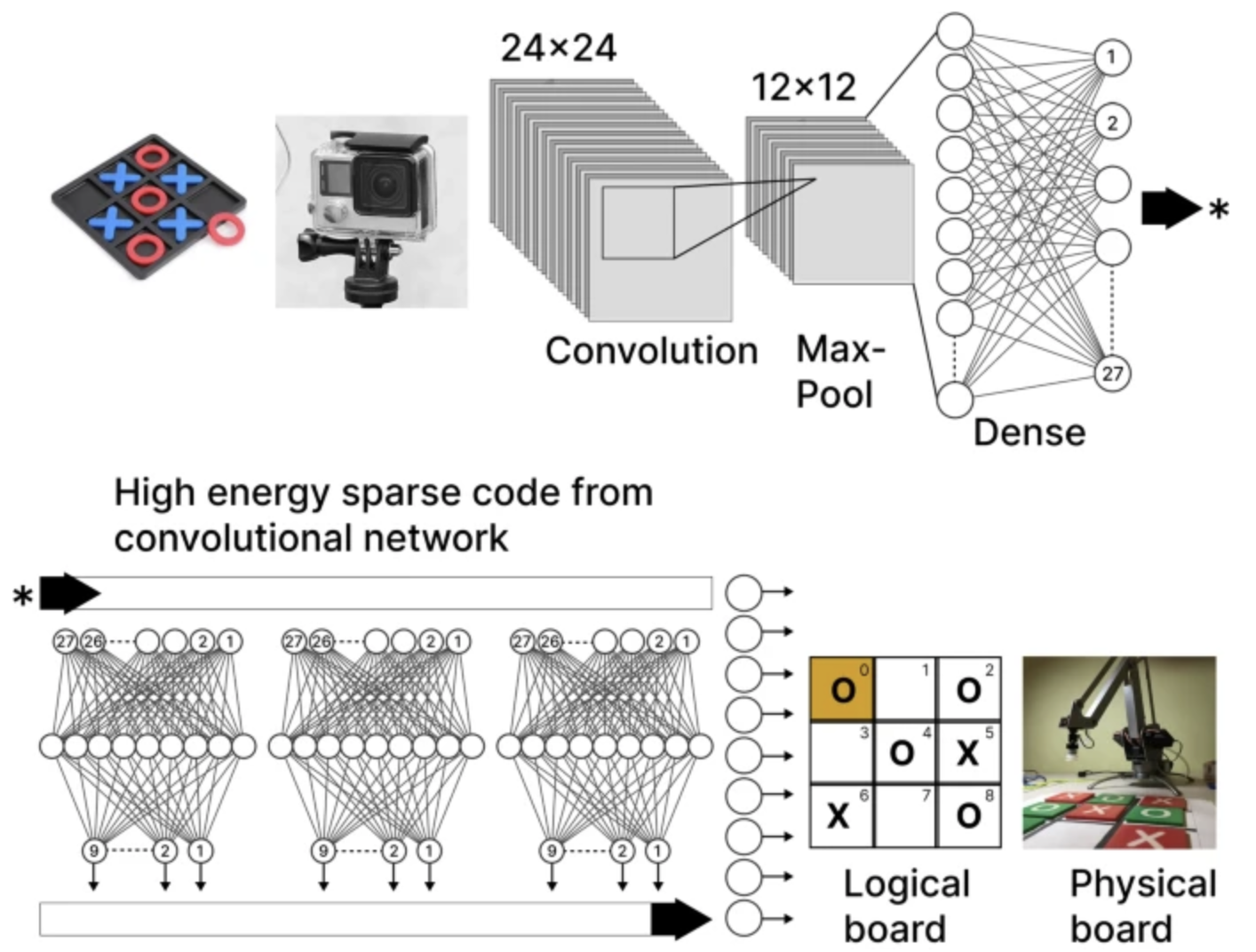
Continual learning, deep reinforcement learning, and microcircuits: a novel method for clever game playing
Oscar Chang, Leo Ramos, Manuel Eugenio Morocho-Cayamcela, Rolando Armas, Luis Zhinin-Vera
Multimedia Tools and Applications 2024 Open Access
Contemporary neural networks frequently encounter the challenge of catastrophic forgetting, wherein newly acquired learning can overwrite and erase previously learned information. The paradigm of continual learning offers a promising solution by enabling intelligent systems to retain and build upon their acquired knowledge over time. This paper introduces a novel approach within the continual learning framework, employing deep reinforcement learning agents that process unprocessed pixel data and interact with microcircuit-like components. These agents autonomously advance through a series of learning stages, culminating in the development of a sophisticated neural network system optimized for predictive performance in the game of tic-tac-toe. Structured to operate in sequential order, each agent is tasked with achieving forward-looking objectives based on Bellman’s principles of reinforcement learning. Knowledge retention is facilitated through the integration of specific microcircuits, which securely store the insights gained by each agent. During the training phase, these microcircuits work in concert, employing high-energy, sparse encoding techniques to enhance learning efficiency and effectiveness. The core contribution of this paper is the establishment of an artificial neural network system capable of accurately predicting tic-tac-toe moves, akin to the observational strategies employed by humans. Our experimental results demonstrate that after approximately 5000 cycles of backpropagation, the system significantly reduced the training loss to , thereby increasing the expected cumulative reward. This advancement in training efficiency translates into superior predictive capabilities, enabling the system to secure consistent victories by anticipating up to four moves ahead.
Continual learning, deep reinforcement learning, and microcircuits: a novel method for clever game playing
Oscar Chang, Leo Ramos, Manuel Eugenio Morocho-Cayamcela, Rolando Armas, Luis Zhinin-Vera
Multimedia Tools and Applications 2024 Open Access
Contemporary neural networks frequently encounter the challenge of catastrophic forgetting, wherein newly acquired learning can overwrite and erase previously learned information. The paradigm of continual learning offers a promising solution by enabling intelligent systems to retain and build upon their acquired knowledge over time. This paper introduces a novel approach within the continual learning framework, employing deep reinforcement learning agents that process unprocessed pixel data and interact with microcircuit-like components. These agents autonomously advance through a series of learning stages, culminating in the development of a sophisticated neural network system optimized for predictive performance in the game of tic-tac-toe. Structured to operate in sequential order, each agent is tasked with achieving forward-looking objectives based on Bellman’s principles of reinforcement learning. Knowledge retention is facilitated through the integration of specific microcircuits, which securely store the insights gained by each agent. During the training phase, these microcircuits work in concert, employing high-energy, sparse encoding techniques to enhance learning efficiency and effectiveness. The core contribution of this paper is the establishment of an artificial neural network system capable of accurately predicting tic-tac-toe moves, akin to the observational strategies employed by humans. Our experimental results demonstrate that after approximately 5000 cycles of backpropagation, the system significantly reduced the training loss to , thereby increasing the expected cumulative reward. This advancement in training efficiency translates into superior predictive capabilities, enabling the system to secure consistent victories by anticipating up to four moves ahead.
2023
Clustering ABI Patients for a Customized Rehabilitation Process
Alejandro Moya, Luis Zhinin-Vera, Elena Navarro, Javier Jaen, José Machado
Proceedings of the 15th International Conference on Ubiquitous Computing & Ambient Intelligence (UCAmI 2023) 2023
Acquired Brain Injury (ABI) is a medical condition resulting from injury or disease that affects the functioning of the brain. The incidence of ABI has increased in recent years, highlighting the need for a comprehensive approach to treatment and rehabilitation to improve patients’ quality of life. Developing appropriate therapies for these patients is a challenging task because of the wide diversity of effects and severity they may suffer. This problem exacerbates the complexity of designing the rehabilitation activities, which is a time-consuming and complicated task that may cause poor patient recovery, if such activities are poorly designed. In order to overcome this problem, it is common practice to create groups of patients with similar complaints and deficits and to design rehabilitation activities that may be reused internally by such groups, facilitating comparative analyses. Usually, such grouping is conducted by specialists who may neglect to detect commonalities due to the huge amount of information to be processed. In this work, a clustering of ABI patients is performed following a systematic methodology, from preprocessing the data to applying appropriate clustering algorithms, in order to guarantee an adequate clustering of ABI patients.
Clustering ABI Patients for a Customized Rehabilitation Process
Alejandro Moya, Luis Zhinin-Vera, Elena Navarro, Javier Jaen, José Machado
Proceedings of the 15th International Conference on Ubiquitous Computing & Ambient Intelligence (UCAmI 2023) 2023
Acquired Brain Injury (ABI) is a medical condition resulting from injury or disease that affects the functioning of the brain. The incidence of ABI has increased in recent years, highlighting the need for a comprehensive approach to treatment and rehabilitation to improve patients’ quality of life. Developing appropriate therapies for these patients is a challenging task because of the wide diversity of effects and severity they may suffer. This problem exacerbates the complexity of designing the rehabilitation activities, which is a time-consuming and complicated task that may cause poor patient recovery, if such activities are poorly designed. In order to overcome this problem, it is common practice to create groups of patients with similar complaints and deficits and to design rehabilitation activities that may be reused internally by such groups, facilitating comparative analyses. Usually, such grouping is conducted by specialists who may neglect to detect commonalities due to the huge amount of information to be processed. In this work, a clustering of ABI patients is performed following a systematic methodology, from preprocessing the data to applying appropriate clustering algorithms, in order to guarantee an adequate clustering of ABI patients.
A Computational Model for Agents in a Social Context: An Approach Based on Theory of Mind
Luis Zhinin-Vera, Víctor López-Jaquero, Elena Navarro, Pascual González
Proceedings of the 15th International Conference on Ubiquitous Computing & Ambient Intelligence (UCAmI 2023) 2023
Socialization should be considered in any Ambient Intelligent system (AmI) where several persons interact, and specially in mental health-oriented ones. A crucial aspect of human social interaction and understanding is the Theory of Mind (ToM), which involves the ability to comprehend and predict the mental state of others, being critical for successful social functioning. The hypothesis of this paper is that the use of ToM to develop Multi-Agent Systems (MAS) to support AmI will enable modeling and reasoning about the mind of the people interacting in the system, making the agent that embodies a person more effective, efficient and social-capable than agents lacking such capacity. This paper presents a computational model based on ToM to support the reasoning and decision-making of socio-cognitive agents. The model applies the fundamental principles of ToM and Belief-Desire-Intention (BDI) agent model to develop a multi-agent system adaptable to real-world scenarios. The case study focuses on School Bullying, for which social theories validate the behavior of the proposed socio-cognitive agents. The results provide a suitable framework integrating advanced technologies with the necessary AI capabilities for the development of social-aware Ambient Intelligent systems.
A Computational Model for Agents in a Social Context: An Approach Based on Theory of Mind
Luis Zhinin-Vera, Víctor López-Jaquero, Elena Navarro, Pascual González
Proceedings of the 15th International Conference on Ubiquitous Computing & Ambient Intelligence (UCAmI 2023) 2023
Socialization should be considered in any Ambient Intelligent system (AmI) where several persons interact, and specially in mental health-oriented ones. A crucial aspect of human social interaction and understanding is the Theory of Mind (ToM), which involves the ability to comprehend and predict the mental state of others, being critical for successful social functioning. The hypothesis of this paper is that the use of ToM to develop Multi-Agent Systems (MAS) to support AmI will enable modeling and reasoning about the mind of the people interacting in the system, making the agent that embodies a person more effective, efficient and social-capable than agents lacking such capacity. This paper presents a computational model based on ToM to support the reasoning and decision-making of socio-cognitive agents. The model applies the fundamental principles of ToM and Belief-Desire-Intention (BDI) agent model to develop a multi-agent system adaptable to real-world scenarios. The case study focuses on School Bullying, for which social theories validate the behavior of the proposed socio-cognitive agents. The results provide a suitable framework integrating advanced technologies with the necessary AI capabilities for the development of social-aware Ambient Intelligent systems.
A Reinforcement Learning Algorithm for Improving the Generation of Telerehabilitation Activities of ABI Patients
Luis Zhinin-Vera, Alejandro Moya, Elena Navarro, Javier Jaen, José Machado
Proceedings of the 15th International Conference on Ubiquitous Computing & Ambient Intelligence (UCAmI 2023) 2023
Acquired Brain Injury (ABI) is a condition caused by an injury or disease that disrupts the normal functioning of the brain. In recent years, there has been a significant increase in the incidence of ABI, highlighting the need for a comprehensive approach that improves the rehabilitation process and, thus, provides people with ABI with a better quality of life. Developing appropriate rehabilitation activities for these patients is a major challenge for experts in the field, as their poor design can hinder the recovery process. One way to address this problem is through the use of smart systems that generate such rehabilitation activities in an automatic way that can then be modified by therapists as they deem appropriate. This automatic generation of rehabilitation activities uses experts’ knowledge to determine their suitability according to the patient’s needs. The problem is that this knowledge may be ill-defined, hampering the rehabilitation process. This paper investigates the possibility of applying Deep Q-Networks, a Reinforcement Learning (RL) algorithm, to evolve and adapt that information according to the outcomes of the rehabilitation process of groups of patients. This will help minimize possible errors made by experts and improve the rehabilitation process.
A Reinforcement Learning Algorithm for Improving the Generation of Telerehabilitation Activities of ABI Patients
Luis Zhinin-Vera, Alejandro Moya, Elena Navarro, Javier Jaen, José Machado
Proceedings of the 15th International Conference on Ubiquitous Computing & Ambient Intelligence (UCAmI 2023) 2023
Acquired Brain Injury (ABI) is a condition caused by an injury or disease that disrupts the normal functioning of the brain. In recent years, there has been a significant increase in the incidence of ABI, highlighting the need for a comprehensive approach that improves the rehabilitation process and, thus, provides people with ABI with a better quality of life. Developing appropriate rehabilitation activities for these patients is a major challenge for experts in the field, as their poor design can hinder the recovery process. One way to address this problem is through the use of smart systems that generate such rehabilitation activities in an automatic way that can then be modified by therapists as they deem appropriate. This automatic generation of rehabilitation activities uses experts’ knowledge to determine their suitability according to the patient’s needs. The problem is that this knowledge may be ill-defined, hampering the rehabilitation process. This paper investigates the possibility of applying Deep Q-Networks, a Reinforcement Learning (RL) algorithm, to evolve and adapt that information according to the outcomes of the rehabilitation process of groups of patients. This will help minimize possible errors made by experts and improve the rehabilitation process.
Detecting Parkinson’s Disease with Convolutional Neural Networks: Voice Analysis and Deep Learning
Kevin Saltos, Luis Zhinin-Vera, Cristina Godoy, Roberth Chachalo, Diego Almeida-Galárraga, Carolina Cadena-Morejón, Andrés Tirado-Espín, Jonathan Cruz-Varela, Fernando Villalba Meneses
Conference on Information and Communication Technologies of Ecuador TICEC 2023
Parkinson’s disease, the second most prevalent neurodegenerative disorder among individuals over the age of 65, poses challenges in early-stage detection, often requiring multiple tests to confirm diagnosis. However, advancements in neural network technology have facilitated the analysis, simplification, and prediction of complex problems that surpass human capacity in terms of speed and efficiency. With its diverse array of physical symptoms, we have specifically focused on vocal pitch changes and alterations, as they manifest in approximately 90% of Parkinson’s patients. Furthermore, the acquisition of vocal data is noninvasive and easily accessible. In this study, we employ a convolutional neural network (CNN) to assess the predictive accuracy of Parkinson’s disease using voice data from affected individuals. Our results demonstrate promising accuracy, achieving a classification accuracy of 95%. By training our CNN model, we aim to provide an affordable and convenient solution for detecting this neurodegenerative condition.
Detecting Parkinson’s Disease with Convolutional Neural Networks: Voice Analysis and Deep Learning
Kevin Saltos, Luis Zhinin-Vera, Cristina Godoy, Roberth Chachalo, Diego Almeida-Galárraga, Carolina Cadena-Morejón, Andrés Tirado-Espín, Jonathan Cruz-Varela, Fernando Villalba Meneses
Conference on Information and Communication Technologies of Ecuador TICEC 2023
Parkinson’s disease, the second most prevalent neurodegenerative disorder among individuals over the age of 65, poses challenges in early-stage detection, often requiring multiple tests to confirm diagnosis. However, advancements in neural network technology have facilitated the analysis, simplification, and prediction of complex problems that surpass human capacity in terms of speed and efficiency. With its diverse array of physical symptoms, we have specifically focused on vocal pitch changes and alterations, as they manifest in approximately 90% of Parkinson’s patients. Furthermore, the acquisition of vocal data is noninvasive and easily accessible. In this study, we employ a convolutional neural network (CNN) to assess the predictive accuracy of Parkinson’s disease using voice data from affected individuals. Our results demonstrate promising accuracy, achieving a classification accuracy of 95%. By training our CNN model, we aim to provide an affordable and convenient solution for detecting this neurodegenerative condition.
Artificial Vision Technique to Detect and Classify Cocoa Beans
Luis Zhinin-Vera, Jonathan Zhiminaicela-Cabrera, Elena Pretel, Pamela Suárez, Oscar Chang, Francesc Antón Castro, Francisco López de la Rosa
International Work-Conference on Artificial Neural Networks IWANN 2023 2023
This article discusses the use of Artificial Intelligence (AI) to classify cocoa beans as healthy or diseased based on established classification criteria, given the challenges faced by the cocoa industry due to the impact of diseased beans on quality and grading. The proposed method uses YOLOv5 and achieved an 94.5% accuracy rate. The article also outlines the development of an affordable and easy-to-implement prototype system that cocoa farmers can use to grade and assure bean quality. The results suggest that the proposed system is successful, and increasing the amount of data improves its reliability, which could help farmers improve their competitiveness in the market.
Artificial Vision Technique to Detect and Classify Cocoa Beans
Luis Zhinin-Vera, Jonathan Zhiminaicela-Cabrera, Elena Pretel, Pamela Suárez, Oscar Chang, Francesc Antón Castro, Francisco López de la Rosa
International Work-Conference on Artificial Neural Networks IWANN 2023 2023
This article discusses the use of Artificial Intelligence (AI) to classify cocoa beans as healthy or diseased based on established classification criteria, given the challenges faced by the cocoa industry due to the impact of diseased beans on quality and grading. The proposed method uses YOLOv5 and achieved an 94.5% accuracy rate. The article also outlines the development of an affordable and easy-to-implement prototype system that cocoa farmers can use to grade and assure bean quality. The results suggest that the proposed system is successful, and increasing the amount of data improves its reliability, which could help farmers improve their competitiveness in the market.
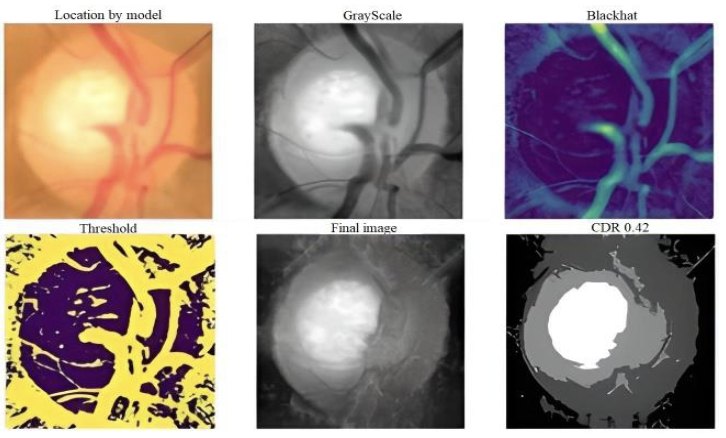
Deep Learning for Glaucoma Detection: R-CNN ResNet-50 and Image Segmentation
Marlene S. Puchaicela-Lozano, Luis Zhinin-Vera, Ana J. Andrade-Reyes, Dayanna M. Baque-Arteaga, Carolina Cadena-Morejón, Andrés Tirado-Espín, Lenin Ramírez-Cando, Diego Almeida-Galárraga, Jonathan Cruz-Varela, Fernando Villalba Meneses
Journal of Advances in Information Technology (JAIT) 2023 Open Access
Glaucoma is a leading cause of irreversible blindness worldwide, affecting millions of people. Early diagnosis is essential to reduce visual loss, and various techniques are used for glaucoma detection. In this work, a hybrid method for glaucoma fundus image localization using pre-trained Region-based Convolutional Neural Networks (R-CNN) ResNet-50 and cup-to-disk area segmentation is proposed. The ACRIMA and ORIGA databases were used to evaluate the proposed approach. The results showed an average confidence of 0.879 for the ResNet-50 model, indicating it as a reliable alternative for glaucoma detection. Moreover, the cup-to-disc ratio was calculated using Gradient-color-based optic disc segmentation, coinciding with the ResNet-50 results in 80% of cases, having an average confidence score of 0.84. The approach suggested in this study can determine if glaucoma is present or not, with a final accuracy of 95% with specific criteria provided to guide the specialist for an accurate diagnosis. In summary, the proposed model provides a reliable and secure method for diagnosing glaucoma using fundus images.
Deep Learning for Glaucoma Detection: R-CNN ResNet-50 and Image Segmentation
Marlene S. Puchaicela-Lozano, Luis Zhinin-Vera, Ana J. Andrade-Reyes, Dayanna M. Baque-Arteaga, Carolina Cadena-Morejón, Andrés Tirado-Espín, Lenin Ramírez-Cando, Diego Almeida-Galárraga, Jonathan Cruz-Varela, Fernando Villalba Meneses
Journal of Advances in Information Technology (JAIT) 2023 Open Access
Glaucoma is a leading cause of irreversible blindness worldwide, affecting millions of people. Early diagnosis is essential to reduce visual loss, and various techniques are used for glaucoma detection. In this work, a hybrid method for glaucoma fundus image localization using pre-trained Region-based Convolutional Neural Networks (R-CNN) ResNet-50 and cup-to-disk area segmentation is proposed. The ACRIMA and ORIGA databases were used to evaluate the proposed approach. The results showed an average confidence of 0.879 for the ResNet-50 model, indicating it as a reliable alternative for glaucoma detection. Moreover, the cup-to-disc ratio was calculated using Gradient-color-based optic disc segmentation, coinciding with the ResNet-50 results in 80% of cases, having an average confidence score of 0.84. The approach suggested in this study can determine if glaucoma is present or not, with a final accuracy of 95% with specific criteria provided to guide the specialist for an accurate diagnosis. In summary, the proposed model provides a reliable and secure method for diagnosing glaucoma using fundus images.
2022
Q-Learning in a Multidimensional Maze Environment"
Oscar Chang, Stadyn Román Niemes, Washington Pijal, Arianna Armijos, Luis Zhinin-Vera
Conference on Information and Communication Technologies of Ecuador TICEC 2022 2022
Experiments with rodents in mazes demonstrate that, in addition to visual cues, spatial localization and olfactory sense play a key role in orientation, foraging and eventually survival. Simulation at some level and understanding of this unique behavior is important for solving optimal routing problems. This article proposes a Reinforcement Learning (RL) agent that learns optimal policies for discovering food sources in a 2D maze using space location and olfactory sensors. The proposed Q-learning solution uses a dispersion formula to generate a cheese smell matrix S, tied in space time to the reward matrix R and the learning matrix Q. RL is performed in a multidimensional maze environment, in which location and odor sensors cooperate in making decisions and learning optimal policies for foraging activities. The proposed method is computationally evaluated using location and odor sensor in two different scenarios: random and Deep-Search First (DFS), showing positive results in both cases.
Q-Learning in a Multidimensional Maze Environment"
Oscar Chang, Stadyn Román Niemes, Washington Pijal, Arianna Armijos, Luis Zhinin-Vera
Conference on Information and Communication Technologies of Ecuador TICEC 2022 2022
Experiments with rodents in mazes demonstrate that, in addition to visual cues, spatial localization and olfactory sense play a key role in orientation, foraging and eventually survival. Simulation at some level and understanding of this unique behavior is important for solving optimal routing problems. This article proposes a Reinforcement Learning (RL) agent that learns optimal policies for discovering food sources in a 2D maze using space location and olfactory sensors. The proposed Q-learning solution uses a dispersion formula to generate a cheese smell matrix S, tied in space time to the reward matrix R and the learning matrix Q. RL is performed in a multidimensional maze environment, in which location and odor sensors cooperate in making decisions and learning optimal policies for foraging activities. The proposed method is computationally evaluated using location and odor sensor in two different scenarios: random and Deep-Search First (DFS), showing positive results in both cases.
A Machine Learning Approach for Blood Glucose Level Prediction Using a LSTM Network
Nayeli Y. Gómez-Castillo, Pedro E. Cajilima-Cardenaz, Luis Zhinin-Vera, Belén Maldonado-Cuascota, Diana León Domínguez, Gabriela Pineda-Molina, Andrés A. Hidalgo-Parra, Fernando A. Gonzales-Zubiate
Proceedings of SmartTech-IC 2021 2022
Diabetes is a chronic disease characterized by the elevation of glucose in blood resulting in multiple organ failure in the body. There are three types of diabetes: type 1, type 2, and gestational diabetes. Type 1 diabetes (T1D) is an autoimmune disease where insulin-producing cells are destroyed. World Health Organization latest reports indicate T1D prevalence is increasing worldwide with approximately one million new cases annually. Consequently, numerous models to predict blood glucose levels have been proposed, some of which are based on Recurrent Neural Networks (RNNs). The study presented here proposes the training of a machine learning model to predict future glucose levels with high precision using the OhioT1DM database and a Long Short-Term Memory (LSTM) network. Three variations of the dataset were used; the first one with original unprocessed data, another processed with linear interpolation, and a last one processed with a time series method. The datasets obtained were split into time prediction horizons (PH) of 5, 30, and 60 min and then fed into the proposed model. From the three variations of datasets, the one processed with time series obtained the highest prediction accuracy, followed by the one processed with linear interpolation. This study will open new ways for addressing healthcare issues related to glucose forecasting in diabetic patients, helping to avoid concomitant complications such as severe episodes of hyperglycemia.
A Machine Learning Approach for Blood Glucose Level Prediction Using a LSTM Network
Nayeli Y. Gómez-Castillo, Pedro E. Cajilima-Cardenaz, Luis Zhinin-Vera, Belén Maldonado-Cuascota, Diana León Domínguez, Gabriela Pineda-Molina, Andrés A. Hidalgo-Parra, Fernando A. Gonzales-Zubiate
Proceedings of SmartTech-IC 2021 2022
Diabetes is a chronic disease characterized by the elevation of glucose in blood resulting in multiple organ failure in the body. There are three types of diabetes: type 1, type 2, and gestational diabetes. Type 1 diabetes (T1D) is an autoimmune disease where insulin-producing cells are destroyed. World Health Organization latest reports indicate T1D prevalence is increasing worldwide with approximately one million new cases annually. Consequently, numerous models to predict blood glucose levels have been proposed, some of which are based on Recurrent Neural Networks (RNNs). The study presented here proposes the training of a machine learning model to predict future glucose levels with high precision using the OhioT1DM database and a Long Short-Term Memory (LSTM) network. Three variations of the dataset were used; the first one with original unprocessed data, another processed with linear interpolation, and a last one processed with a time series method. The datasets obtained were split into time prediction horizons (PH) of 5, 30, and 60 min and then fed into the proposed model. From the three variations of datasets, the one processed with time series obtained the highest prediction accuracy, followed by the one processed with linear interpolation. This study will open new ways for addressing healthcare issues related to glucose forecasting in diabetic patients, helping to avoid concomitant complications such as severe episodes of hyperglycemia.
An Asymetric-key Cryptosystem based on Artificial Neural Network
Rafael Valencia-Ramos, Luis Zhinin-Vera, Gissela E. Pilliza, Oscar Chang
Proceedings of the 14th International Conference on Agents and Artificial Intelligence - Volume 3 2022
Protect the information has always been important concerns for society, and mainly now in digital era. Currently exists different platforms to manage critical and sensitive information, ranging from bank accounts to social media. All platforms have taken steps to guarantee that the data passing through them is protected from hackers. An essential subject in digital world born, giving place to symmetric and asymmetric key algorithms. Asymmetric key algorithms work by manipulating very big prime numbers, which gives a high level of security but also takes a long time to compute. This paper offers a cryptographic system based on deep learning techniques. The approach avoided the necessity of big prime numbers by using the synaptic weights of an autoencoder neural network as encryption and decryption keys. The suggested method allows for a high amount of unpredictability in the initial and final synaptic weights without compromising the network’s overall performance. The results was show n to be resilient and difficult to break in a theoretical security study with a low computational time.
An Asymetric-key Cryptosystem based on Artificial Neural Network
Rafael Valencia-Ramos, Luis Zhinin-Vera, Gissela E. Pilliza, Oscar Chang
Proceedings of the 14th International Conference on Agents and Artificial Intelligence - Volume 3 2022
Protect the information has always been important concerns for society, and mainly now in digital era. Currently exists different platforms to manage critical and sensitive information, ranging from bank accounts to social media. All platforms have taken steps to guarantee that the data passing through them is protected from hackers. An essential subject in digital world born, giving place to symmetric and asymmetric key algorithms. Asymmetric key algorithms work by manipulating very big prime numbers, which gives a high level of security but also takes a long time to compute. This paper offers a cryptographic system based on deep learning techniques. The approach avoided the necessity of big prime numbers by using the synaptic weights of an autoencoder neural network as encryption and decryption keys. The suggested method allows for a high amount of unpredictability in the initial and final synaptic weights without compromising the network’s overall performance. The results was show n to be resilient and difficult to break in a theoretical security study with a low computational time.
2021
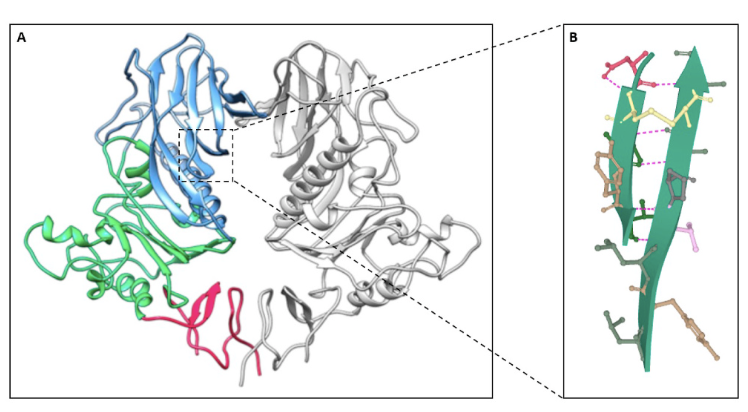
A Protein folding robot driven by a self taught agent
Oscar Chang, Fernando A. Gonzales-Zubiate, Luis Zhinin-Vera, Rafael Valencia-Ramos, Israel Pineda, Antonio Diaz-Barrios
Biosystems 2021
This paper proposes a Tic-Tac-Toe learning environment based on a self-motivated neural agent that learns by itself these exceptional game situations and then use this knowledge in real world tournaments, where it mimics a Markov model. The used reinforcement learning method involves a reward gaining strategy where indexed sub networks are noise balanced trained, as to clearly point toward found rewards, thus endorsing a successful future search for maximal recompenses. During training the agent explores far ahead movements based on the Bellman equation and memorizes game patterns that assure winning-ahead situations. During the operating phase the neural agent receives advising from the trained networks and realizes aperture moves that mimic the abilities of clever human players.
A Protein folding robot driven by a self taught agent
Oscar Chang, Fernando A. Gonzales-Zubiate, Luis Zhinin-Vera, Rafael Valencia-Ramos, Israel Pineda, Antonio Diaz-Barrios
Biosystems 2021
This paper proposes a Tic-Tac-Toe learning environment based on a self-motivated neural agent that learns by itself these exceptional game situations and then use this knowledge in real world tournaments, where it mimics a Markov model. The used reinforcement learning method involves a reward gaining strategy where indexed sub networks are noise balanced trained, as to clearly point toward found rewards, thus endorsing a successful future search for maximal recompenses. During training the agent explores far ahead movements based on the Bellman equation and memorizes game patterns that assure winning-ahead situations. During the operating phase the neural agent receives advising from the trained networks and realizes aperture moves that mimic the abilities of clever human players.
2020
Stock Markets Risk Analysis Performance by Self Organized Maps AI Techniques: Comparison and Implementation of Three SOM Methods
Gissela Pilliza, Luis Zhinin-Vera, Rafael Valencia-Ramos, Ronny Velastegui
Proceedings of the TICEC 2020: Information and Communication Technologies 2020
Despite the exponential increase in the use of AI tools, the financial field has become a target just in the latest years. The stock markets meant a decisive factor for economic growth as it works as a management mechanism for money generated by the industrial force of the countries. In order to obtain the improved algorithm, this work focus on establishing the best SOM architecture for stock market treatment in an initial step. Therefore, after the literature review, the data extraction was performed using Yahoo Finance open source to get the historical data of the selected financial index. The ISOM SP40 proposed in this work uses an adequate combination of hexagonal SOM architecture and neighbor function based on Manhattan distance. Moreover, two SOM methods more denominated SOM IBEX35 and SOM NYSE were tested by the same conditions for compare, and determinate the best scenario for SP Latin America 40 data set. Thus the risk investment was analyzed with density correlations of profit, industrial area, and geography detected with an 80% of success rate using the top 9 companies in the stock index, also it was verified in a time-frequency analysis developed here with the top 6 companies reference companies from 2014-2019. The training time in the proposed ISOM SP40 method also improves two decimal places in comparison with the other tested techniques. In this sense, there is appropriated to establish that the improved algorithm was found, and it succeeds in the adaptation to SP Latin America 40 index data set.
Stock Markets Risk Analysis Performance by Self Organized Maps AI Techniques: Comparison and Implementation of Three SOM Methods
Gissela Pilliza, Luis Zhinin-Vera, Rafael Valencia-Ramos, Ronny Velastegui
Proceedings of the TICEC 2020: Information and Communication Technologies 2020
Despite the exponential increase in the use of AI tools, the financial field has become a target just in the latest years. The stock markets meant a decisive factor for economic growth as it works as a management mechanism for money generated by the industrial force of the countries. In order to obtain the improved algorithm, this work focus on establishing the best SOM architecture for stock market treatment in an initial step. Therefore, after the literature review, the data extraction was performed using Yahoo Finance open source to get the historical data of the selected financial index. The ISOM SP40 proposed in this work uses an adequate combination of hexagonal SOM architecture and neighbor function based on Manhattan distance. Moreover, two SOM methods more denominated SOM IBEX35 and SOM NYSE were tested by the same conditions for compare, and determinate the best scenario for SP Latin America 40 data set. Thus the risk investment was analyzed with density correlations of profit, industrial area, and geography detected with an 80% of success rate using the top 9 companies in the stock index, also it was verified in a time-frequency analysis developed here with the top 6 companies reference companies from 2014-2019. The training time in the proposed ISOM SP40 method also improves two decimal places in comparison with the other tested techniques. In this sense, there is appropriated to establish that the improved algorithm was found, and it succeeds in the adaptation to SP Latin America 40 index data set.
E-Move: Domain Specific Language for People with Movement Disorders
Rafael Valencia-Ramos, Luis Zhinin-Vera, Oscar Chang, Israel Pineda
Proceedings of the TICEC 2020: Information and Communication Technologies 2020
Programmers with movement disorders do not currently have a language that aids them to write code. This work proposes the creation of E-Move, a friendly Domain-Specific Language (DSL) that tolerates involuntary typing errors. E-Move targets programmers who suffer from involuntary movements in their upper extremities related to movement disorders caused by neurodegenerative conditions such as Parkin-son, myoclonus, chorea, tics, dystonia, and tremor. This work describes the three essential elements that allow the proposed programming language to work effectively: the grammar, the back-end, and the front-end. Additionally , several illustrative examples showcase the usage of E-Move. E-Move was developed using Python, textX, and Pure Python Compiler Infrastructure (PPCI). The result is a programming language that tolerates involuntary typing. Therefore, more people can access coding, which is an important skill.
E-Move: Domain Specific Language for People with Movement Disorders
Rafael Valencia-Ramos, Luis Zhinin-Vera, Oscar Chang, Israel Pineda
Proceedings of the TICEC 2020: Information and Communication Technologies 2020
Programmers with movement disorders do not currently have a language that aids them to write code. This work proposes the creation of E-Move, a friendly Domain-Specific Language (DSL) that tolerates involuntary typing errors. E-Move targets programmers who suffer from involuntary movements in their upper extremities related to movement disorders caused by neurodegenerative conditions such as Parkin-son, myoclonus, chorea, tics, dystonia, and tremor. This work describes the three essential elements that allow the proposed programming language to work effectively: the grammar, the back-end, and the front-end. Additionally , several illustrative examples showcase the usage of E-Move. E-Move was developed using Python, textX, and Pure Python Compiler Infrastructure (PPCI). The result is a programming language that tolerates involuntary typing. Therefore, more people can access coding, which is an important skill.
Self-taught Neural Agents in Clever Game Playing
Oscar Chang, Luis Zhinin-Vera
Proceedings of the Future Technologies Conference (FTC) 2020 2020
This paper proposes a Tic-Tac-Toe learning environment based on a self-motivated neural agent that learns by itself these exceptional game situations and then use this knowledge in real world tournaments, where it mimics a Markov model. The used reinforcement learning method involves a reward gaining strategy where indexed sub networks are noise balanced trained, as to clearly point toward found rewards, thus endorsing a successful future search for maximal recompenses. During training the agent explores far ahead movements based on the Bellman equation and memorizes game patterns that assure winning-ahead situations. During the operating phase the neural agent receives advising from the trained networks and realizes aperture moves that mimic the abilities of clever human players.
Self-taught Neural Agents in Clever Game Playing
Oscar Chang, Luis Zhinin-Vera
Proceedings of the Future Technologies Conference (FTC) 2020 2020
This paper proposes a Tic-Tac-Toe learning environment based on a self-motivated neural agent that learns by itself these exceptional game situations and then use this knowledge in real world tournaments, where it mimics a Markov model. The used reinforcement learning method involves a reward gaining strategy where indexed sub networks are noise balanced trained, as to clearly point toward found rewards, thus endorsing a successful future search for maximal recompenses. During training the agent explores far ahead movements based on the Bellman equation and memorizes game patterns that assure winning-ahead situations. During the operating phase the neural agent receives advising from the trained networks and realizes aperture moves that mimic the abilities of clever human players.
Time Series Prediction by Using Convolutional Neural Networks
Ronny Velastegui, Luis Zhinin-Vera, Oscar Chang, Gissela Pilliza
Proceedings of the Future Technologies Conference (FTC) 2020 2020
All companies need an effective method to predict future sales, and several classic statistical methods exist and are heavily used in the industry. This work proposes a novel sales prediction method based on Convolutional Neural Networks. This type of neural network is generally used for image processing tasks. But in this work, we explore new applications and develop models that produce good results in sales prediction for real pharmaceutical product data. Also, we implemented several classical and statistical prediction methods, and we compared them with our proposed model. For this, we used three comparison metrics: prediction accuracy, number of weights, and number of iterations. Finally , we proceeded to determine which prediction method is better both in accuracy and efficiency terms.
Time Series Prediction by Using Convolutional Neural Networks
Ronny Velastegui, Luis Zhinin-Vera, Oscar Chang, Gissela Pilliza
Proceedings of the Future Technologies Conference (FTC) 2020 2020
All companies need an effective method to predict future sales, and several classic statistical methods exist and are heavily used in the industry. This work proposes a novel sales prediction method based on Convolutional Neural Networks. This type of neural network is generally used for image processing tasks. But in this work, we explore new applications and develop models that produce good results in sales prediction for real pharmaceutical product data. Also, we implemented several classical and statistical prediction methods, and we compared them with our proposed model. For this, we used three comparison metrics: prediction accuracy, number of weights, and number of iterations. Finally , we proceeded to determine which prediction method is better both in accuracy and efficiency terms.
Sales Forecast by Using Deep Rectifier Network
Oscar Chang, Galo Mosquera, Zenaida Castillo, Luis Zhinin-Vera
Proceedings of the Future Technologies Conference (FTC) 2020 2020
This paper presents a deep architecture which explores a few years of weekly sales data and learns to makes assertive predictions. The system is assembled with ReLU neurons, whose learning behavior makes possible the effective training of sparse coded deep sub-nets. The developed learning algorithm uses two learning stages where the first produces sparse representation of the studied time series and the second harvest one week ahead predictions using this sparse data. In both cases the reward system is future-focused and favors search for future capacities. To achieving successful network training we develop an algorithms that deals with exploding gradient problem, typical of ReLU networks. The fully assembled predictor automatically learn features from structured data and produces inventories with improved dollar cost. The system has been tested in real time with real data.
Sales Forecast by Using Deep Rectifier Network
Oscar Chang, Galo Mosquera, Zenaida Castillo, Luis Zhinin-Vera
Proceedings of the Future Technologies Conference (FTC) 2020 2020
This paper presents a deep architecture which explores a few years of weekly sales data and learns to makes assertive predictions. The system is assembled with ReLU neurons, whose learning behavior makes possible the effective training of sparse coded deep sub-nets. The developed learning algorithm uses two learning stages where the first produces sparse representation of the studied time series and the second harvest one week ahead predictions using this sparse data. In both cases the reward system is future-focused and favors search for future capacities. To achieving successful network training we develop an algorithms that deals with exploding gradient problem, typical of ReLU networks. The fully assembled predictor automatically learn features from structured data and produces inventories with improved dollar cost. The system has been tested in real time with real data.
A Deep Learning Approach for Symmetric Key Cryptography System
Francisco Quinga, Luis Zhinin-Vera, Oscar Chang
Proceedings of the Future Technologies Conference (FTC) 2020 2020
Cryptography is the art and science of protecting information form intruders of data by making the information unintelligible (encryption), as well as, to retrieve the original data (decryption). Good cryptography means that the information is encrypted in such a way that a brute force attack against the key or cryptography algorithm are all impossible. Up to date, several ciphers utilizing complex mathematics have been proposed. But none of them are entirely secure and their vulnerabilities have been exposed. Therefore, novel cryptography algorithms, capable of provide superior protection, are highly desirable. In proposed work, a method for generating a key from an alphanumeric login password is introduced and implementation of symmetric-key encryption and decryption using an autoencoder neural network. Our experiments show that proposed method overcome traditional cryptography algorithms, at lest when small text file are used, and it is extremely hard to crack.
A Deep Learning Approach for Symmetric Key Cryptography System
Francisco Quinga, Luis Zhinin-Vera, Oscar Chang
Proceedings of the Future Technologies Conference (FTC) 2020 2020
Cryptography is the art and science of protecting information form intruders of data by making the information unintelligible (encryption), as well as, to retrieve the original data (decryption). Good cryptography means that the information is encrypted in such a way that a brute force attack against the key or cryptography algorithm are all impossible. Up to date, several ciphers utilizing complex mathematics have been proposed. But none of them are entirely secure and their vulnerabilities have been exposed. Therefore, novel cryptography algorithms, capable of provide superior protection, are highly desirable. In proposed work, a method for generating a key from an alphanumeric login password is introduced and implementation of symmetric-key encryption and decryption using an autoencoder neural network. Our experiments show that proposed method overcome traditional cryptography algorithms, at lest when small text file are used, and it is extremely hard to crack.
A Wise Up Visual Robot Driven by a Self-taught Neural Agent
Oscar Chang, Luis Zhinin-Vera
Proceedings of the Future Technologies Conference (FTC) 2020 2020
This paper presents a biological inspired robot capable of learning by itself high level Tic-Tac-Toe playing policies and then use this knowledge to advantageously compete with humans. The robot comprises a robotic arm, an artificial vision system and a self-motivated neural agent which has the capability to explore in a simulated ambient, new forms of game episodes that conduce toward bigger rewards. During the training phase a three terms reinforcement learning scheme is proposed, where the agent memory resources are sustained by adviser neural sub-networks, noise-balanced trained as to satisfy the look for future conditions in the control optimization predicted by the Bellman equation. In the operating phase the components merge into a wised up robot, with look ahead capacities, that mimic the abilities of ingenious human players. The achieved look ahead robotic intelligence could be useful in other complex robotic mechanisms.
A Wise Up Visual Robot Driven by a Self-taught Neural Agent
Oscar Chang, Luis Zhinin-Vera
Proceedings of the Future Technologies Conference (FTC) 2020 2020
This paper presents a biological inspired robot capable of learning by itself high level Tic-Tac-Toe playing policies and then use this knowledge to advantageously compete with humans. The robot comprises a robotic arm, an artificial vision system and a self-motivated neural agent which has the capability to explore in a simulated ambient, new forms of game episodes that conduce toward bigger rewards. During the training phase a three terms reinforcement learning scheme is proposed, where the agent memory resources are sustained by adviser neural sub-networks, noise-balanced trained as to satisfy the look for future conditions in the control optimization predicted by the Bellman equation. In the operating phase the components merge into a wised up robot, with look ahead capacities, that mimic the abilities of ingenious human players. The achieved look ahead robotic intelligence could be useful in other complex robotic mechanisms.
Q-Credit Card Fraud Detector for Imbalanced Classification using Reinforcement Learning
Luis Zhinin-Vera, Oscar Chang, Rafael Valencia-Ramos, Ronny Velastegui, Gissela E. Pilliza, Francisco Quinga Socasi
12th International Conference on Agents and Artificial Intelligence 2020
Every year, billions of dollars are lost due to credit card fraud, causing huge losses for users and the financial industry. This kind of illicit activity is perhaps the most common and the one that causes most concerns in the finance world. In recent years great attention has been paid to the search for techniques to avoid this significant loss of money. In this paper, we address credit card fraud by using an imbalanced dataset that contains transactions made by credit card users. Our Q-Credit Card Fraud Detector system classifies transactions into two classes: genuine and fraudulent and is built with artificial intelligence techniques comprising Deep Learning, Auto-encoder, and Neural Agents, elements that acquire their predicting abilities through a Q-learning algorithm. Our computer simulation experiments show that the assembled model can produce quick responses and high performance in fraud classification.
Q-Credit Card Fraud Detector for Imbalanced Classification using Reinforcement Learning
Luis Zhinin-Vera, Oscar Chang, Rafael Valencia-Ramos, Ronny Velastegui, Gissela E. Pilliza, Francisco Quinga Socasi
12th International Conference on Agents and Artificial Intelligence 2020
Every year, billions of dollars are lost due to credit card fraud, causing huge losses for users and the financial industry. This kind of illicit activity is perhaps the most common and the one that causes most concerns in the finance world. In recent years great attention has been paid to the search for techniques to avoid this significant loss of money. In this paper, we address credit card fraud by using an imbalanced dataset that contains transactions made by credit card users. Our Q-Credit Card Fraud Detector system classifies transactions into two classes: genuine and fraudulent and is built with artificial intelligence techniques comprising Deep Learning, Auto-encoder, and Neural Agents, elements that acquire their predicting abilities through a Q-learning algorithm. Our computer simulation experiments show that the assembled model can produce quick responses and high performance in fraud classification.
Digital Cryptography Implementation using Neurocomputational Model with Autoencoder Architecture
Francisco Quinga Socasi, Ronny Velastegui, Luis Zhinin-Vera, Rafael Valencia-Ramos, Francisco Ortega-Zamorano, Oscar Chang
12th International Conference on Agents and Artificial Intelligence 2020 Open Access
An Autoencoder is an artificial neural network used for unsupervised learning and for dimensionality reduction. In this work, an Autoencoder has been used to encrypt and decrypt digital information. So, it is implemented to code and decode characters represented in an 8-bit format, which corresponds to the size of ASCII representation. The Back-propagation algorithm has been used in order to perform the learning process with two different variant depends on when the discretization procedure is carried out, during (model I) or after(model II) the learning phase. Several tests were conducted to determine the best Autoencoder architectures to encrypt and decrypt, taking into account that a good encrypt method corresponds to a process that generate a new code with uniqueness and a good decrypt method successfully recovers the input data. A network that obtains a 100% in the two process is considered a good digital cryptography implementation. Some of the proposed architecture obtain a 100% in the processes to encrypt 52 ASCII characters (Letter characters) and95 ASCII characters (printable characters), recovering all the data.
Digital Cryptography Implementation using Neurocomputational Model with Autoencoder Architecture
Francisco Quinga Socasi, Ronny Velastegui, Luis Zhinin-Vera, Rafael Valencia-Ramos, Francisco Ortega-Zamorano, Oscar Chang
12th International Conference on Agents and Artificial Intelligence 2020 Open Access
An Autoencoder is an artificial neural network used for unsupervised learning and for dimensionality reduction. In this work, an Autoencoder has been used to encrypt and decrypt digital information. So, it is implemented to code and decode characters represented in an 8-bit format, which corresponds to the size of ASCII representation. The Back-propagation algorithm has been used in order to perform the learning process with two different variant depends on when the discretization procedure is carried out, during (model I) or after(model II) the learning phase. Several tests were conducted to determine the best Autoencoder architectures to encrypt and decrypt, taking into account that a good encrypt method corresponds to a process that generate a new code with uniqueness and a good decrypt method successfully recovers the input data. A network that obtains a 100% in the two process is considered a good digital cryptography implementation. Some of the proposed architecture obtain a 100% in the processes to encrypt 52 ASCII characters (Letter characters) and95 ASCII characters (printable characters), recovering all the data.